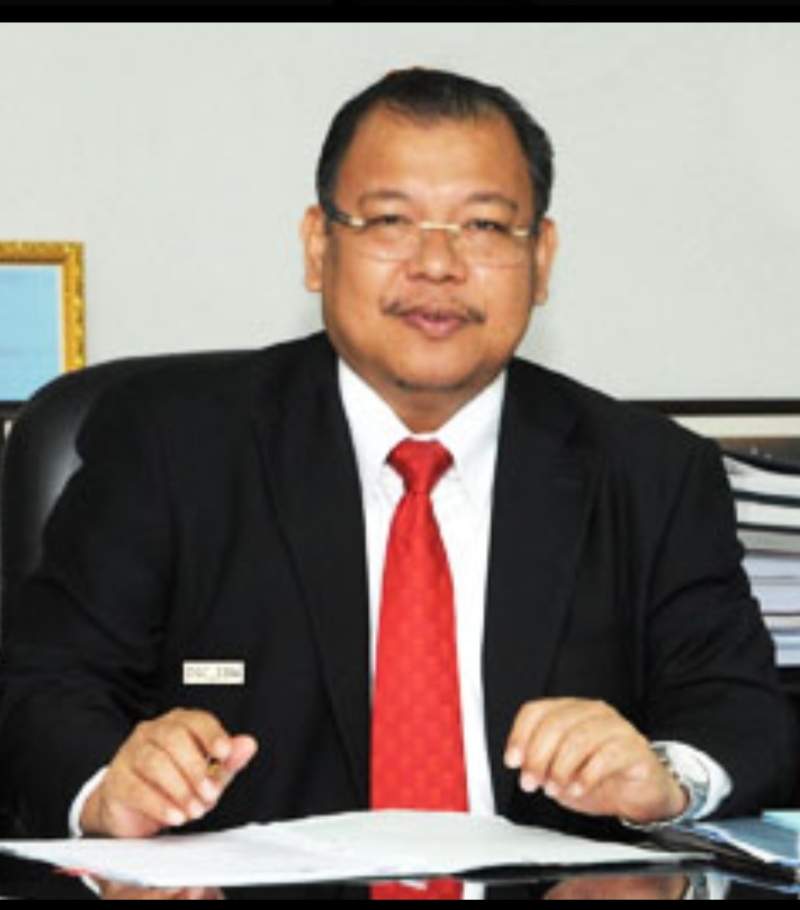
KUALA LUMPUR: Despite the devastating economic impact brought upon by the Covid-19 pandemic and many uncertainties ahead, it is possible for the nation to have a speedy economic recovery if all Malaysians could work together for such a common goal, said Tan Sri Noor Azlan Ghazali, Executive Director of National Economic Action Council (NEAC).
He noted as a matter of fact that, not only Malaysia but the entire world is currently facing a dire economic situation and financial distress.
He explained that among the key functions of NEAC which is chaired by the prime minister Tan Sri Muhyiddin Yassin are as follows:
· To review and address the current state of the economic and financial affairs as well as welfare of the rakyat;
· Formulate strategies to stimulate economic growth and enhance the well-being of the rakyat;
· Identify immediate measures to address current issues such as reducing cost of living, creating job opportunities, eradicating poverty and increasing home ownership; and
· Coordinate overlapping functions between ministries/agencies in implementing action plans to ensure a sustainable and inclusive socio-economic growth.
He acknowledged that it is crucial to formulate clear directions and effective strategies, in order to achieve economic recovery and long-term economic growth for the country.
The NEAC also discovered that a lot of the existing problems facing the country are not ‘new’ but ‘old’ ones that were not given due attention, he said.
“Nonetheless, we in EAC take each and every issue seriously and we shall do our best to address or complete it,” he assured.
Noor Azlan who is an economist by training said this speaking at the online conference between NEAC and the Federation of Chinese Associations Malaysia (Huazong) leadership led by its president, Tan Sri T.C Goh, today. Also in attendance were, Huazong vice presidents Dato’ Oie Poh Choon and Dato’ Richard Wee, Treasurer-general, Tan Sri Tan Kean Soon, its Secretary-general and deputy, Dato’ Dr Wong Aik Loung and Yong Yew Wei, Central Committee members Dato’ Tan Ah Chio and Dato’ Lee Teck Hua, its Deputy Youth Chief, Goh Han Koon and its VP youth chief *Dr Musa Chong* .
Noor Azlan disclosed that besides compiling daily global and domestic economic data and reports, NEAC also discusses pressing economic issues.
“Besides conducting meetings once a week, we also closely monitor economic issues and challenges facing various sectors, and provide proposals and solutions to the government and relevant departments and agencies,” he said.
Besides this, the NEAC also conducts joint meetings with the National Security Council (NSC), mainly to draft standard operating procedures (SOP) for movement control order (MCO) of various degrees for the various economic sectors.
It also conducts in-depth study on micro and macro economic development, and many effective interactive programs such as the online conference and dialogue with Huazong.
“Over the period of past one year, we have been engaging with civil society organizations, in no less than 300 occasions, to discuss the current economic situation and to gather feedback to make improvement.
“Issues which affect the people are serious matters and we have to reach out to the people, in order to resolve them effectively,” he said.
He thus thanked Huazong for facilitating the said online conference cum dialogue to discuss the current economic situation, and hoped that both NEAC and Huazong could continue to maintain a close rapport and cooperation, after this.
Meanwhile, during the online discussion, Goh acknowledged that the pandemic has adversely impacted on the nation’s public health system, posed serious threat to the peoples’ health and causing deaths, besides inflicting unprecedented adverse impact to various sectors. He however was hopeful that with the national vaccination program now in progress, it’s just a matter of time that life would return to normal for Malaysians.
He however reiterated that all Malaysians must continue to give their full support and cooperation to the government and the Ministry of Health (MOH), especially to fully support the ongoing vaccination program, to fully comply with the SOPs issued by the government, and to strive for speedy economic recovery.
On behalf of Huazong, Goh also put forward the following proposals for the government/NEAC’s attention and consideration:
1. To review our economic growth rate
Although the Ministry of Finance earlier projected that our economy would rebound from the Covid-19 pandemic this year, at the recovery rate of between 6.5% to 7.5%. Huazong nonetheless opines that such projection is over optimistic and warrants a review. The reasons include the following:
A). Last year, our national economy contracted by 5.6%, which was the worst decline in the past 22 years, after the Asian financial crisis in 1998, which recorded a decline of 7.4%. Furthermore, our neighbouring countries, like Thailand, have announced a downward revision of its economic growth, from the earlier projection of 3.5% – 4.5% to 2.5% – 3.5%. As for Singapore, while it still maintained a projected growth rate of 4% – 6% for this year, last year it faced an economic decline of 5.4%, which was the worst in the last 50 years.
B). The passing of the Temporary Measures For Government Financing (Coronavirus Disease 2019 (Covid-19)) Bill 2020 by Parliament previously, followed by the setting up of Kumpulan Wang COVID-19 allows the government to increase its spending through borrowing, and to support the economy when necessary; The said Bill also allows the government to raise the debt ceiling from the current GDP of 55% to 60%. This signifies that our national debt will be high, and it will inevitably have an impact on our economic growth.
C). In regards to Sovereign rating, although Moody’s Investors Service (Moody’s) recently affirmed Malaysia’s A3 rating, which is considered a “stable” rating, but Fitch Solutions has moved to revise Malaysia’s 2021 GDP growth to 4.9% from 10% previously; it has not even ruled out the possibility of further downward revising it in the next couple of months.
2. The need to trim the civil service
Although Malaysia will soon be carrying out its national vaccination program, and the economy is expected to recover in the third or fourth quarter, the general projection was that a full sprint post-pandemic is more likely, by next year. This means, this year is still full of uncertainties and challenges, and the government needs to be more prudent with its financial management and policies, and to gradually reduce its spending, especially by trimming down its much-bloated civil service. The government should thus muster a stronger ‘political will’ in order to achieve this objective. For example, it should not recruit new staff for various government departments and agencies, unnecessarily, besides promoting meritocracy in the civil service, so as to better improve the delivery system.
3. Govt to implement mega projects
The government, in collaboration with the private sector, to continue to implement development plans, including high-impact developments. We especially welcome and support the government to proceed with such mega development projects like the East Coast Rail Link (ECRL), Pan Borneo Highway, Mass Rapid Transit 3 (MRT3), the Rapid Transit System (RTS), and Bandar Malaysia project, among others. We believe these high-impact development projects could help propel various economic sectors including those in the midstream and downstream, besides sectors like tourism, property and logistics.
4. Restart negotiation on Kuala Lumpur-Singapore High Speed Rail (HSR) project, when the time is right
While we are not against the shelving of the Kuala Lumpur-Singapore High Speed Rail (HSR) project, we nonetheless propose the government to revive it when the time is right. We believe its implementation would be beneficial to the two countries in the long run. It would also facilitate the execution of the proposed Trans-Asian Railway (TAR) project, which is long overdue.
5. To open the remaining economic sectors
Last year, our prime minister had revealed that during the 1st movement control order (MCO), our nation was losing RM2.4 billion every day, while our senior minister of defense reported that during the same period, 13,445 factories have closed down. Another official statistics indicated that, within the six months period of March to September, last year, 32,469 businesses have wound up. Hence, when it came to implementing MCO 2.0 the government was more cautious and balanced. Notwithstanding, our Finance Minister recently revealed that during MCO 2.0 the nation incurred a daily losses of RM700 million, which was quite substantial still.
Hence, we propose the government to open up other economic and business sectors, so as to stimulate the market. This would provide more job opportunities for the people, so that they could have a stable income to provide for their family and to pay for their debts.
6. To introduce the “Vaccine Passport”
With the national vaccination program in progress, we propose the government to emulate the move of some foreign nations in introducing the “vaccine passport” for those who have undergone vaccination, so that they could conduct cross-border travelling. This would promote tourism, investment and other economic sectors and expedite economic recovery, post pandemic. For a start, such a move can be implemented in the ASEAN or Asia region; but there must be a premeditated proper and safe SOP of international standard for such plans.
7. To introduce the Reciprocal Green Lane (RGL) program
Before implementing the “vaccine passport” plan, we proposed the government to expand such mutually-beneficial measures like the Reciprocal Green Lane (RGL) to also include other ASEAN member countries or those in Asia, so as to effectively resume bilateral trade and economic activities with these countries. The RGL approach was first implemented between Malaysia and Singapore, and subsequently between Malaysia and Indonesia following our Prime Minister’s official visit to Indonesia, recently.
8. Encourage Malaysians to partake in Digital Economy
Besides having inflicted a devastating and far-reaching impact to a vast majority of ordinary Malaysians, the Covid-19 pandemic and the ensuing Movement Control Order (MCO) of various categories have also accelerated the growth of Digital Economy. With the help of internet and digital technology, almost all businesses and industries have started to move towards e-commerce, Nowadays, online shopping has become a new norm for many people; even hawkers and small businesses have started to go online to conduct their businesses. We therefore propose the government to provide more incentives and to conduct a public campaign to encourage more Malaysians to invest in the Digital Economy.
9. Supports the launch of Digital Economy
We welcome and support the launch of the Digital Economy Blueprint (MyDIGITAL) by the prime minister on 19 February. We are convinced that it will be a prime mover for our economy, after this. If everything goes smoothly as planned, the Digital Economy is expected to contribute 22.6% to our nation’s GDP by 2025. We are also pleased and hopeful that the government’s allocation of RM15 billion for development of 5G infrastructure nationwide would create more job opportunities for Malaysians. We also hope that such a move would better facilitate the implementation of e-government, spur the growth and improve the quality of logistics services, online shopping, and e-commerce in our country.
10. Set up Special Committee to address high unemployment rate.
The National Statistics Department’s statistics indicated that, due to the third wave of the pandemic in the 4th-quarter of last year, the unemployment rate in the country has increased from 4.7% to 4.8%, or from 745,000 people to 772,900 people, which was an increase of 0.1%. All these years, our unemployment rate was maintained at 3%. An unemployment rate exceeding 4.5% is the highest in the last 28 years, since 1993. The other huge challenge which we are currently facing is that, every year, we have an estimate of 150,000 university fresh graduates looking for jobs in the market. Hence, it is crucial that the government must strive harder to address this pressing issue of high unemployment in our country as it really affects the people’s livelihood. We hence propose the government through the Ministry of Human Resource to set up a trans-department Special Committee to conduct a thorough study into this issue, and to submit an “effective-and-caring” proposal to the Federal Cabinet to rapidly bring down the unemployment rate to the previous 3%, or a lower rate.
11. Adjustment of corporate tax
Although the private sector has been the prime trotter for the growth of our national economy, all these while, undeniably it too has been badly hit by the pandemic, and effectively putting a vast majority of the ordinary businesses in a dire situation and in dire need of intervention from the government to provide such assistance like tax incentives, low interest financing, wage subsidy program etc, for them to stay afloat. We thus proposed the government come out with a more competitive corporate tax for businesses and small and medium enterprises (SMEs). For a start, the government could consider a lower corporate tax rate for businesses and corporations which were badly affected by the pandemic, in last year and this year, to help them to stabilise their cash flow.
12. To ensure a standardised SOP in fighting Covid-19
The Covid-19 pandemic has exposed various shortcomings in government policies, such as inconsistency in its standard operating procedures (SOPs), even among the Perikatan Nasional (PN) led Federal government, the PN-ruled states and the local authorities. Such inconsistency can be seen in businesses which are allowed to operate and those which are disallowed, business operating hours, restriction of number of people, enforcement operations etc, which drew flaks from the people and caused great embarrassment to the government. We thus propose the government to be more discerning and to adopt consultative approach when formulating its policies, so as to avoid causing unnecessary hassles and sufferings to the people.
13. To effectively resolve the perennial foreign workers and illegal immigrants issues
The foreign workers and illegal immigrant colonies have obviously become a focal point during the pandemic period, especially following emergence of Covid-19 clusters among them, largely due to poor living and hygiene conditions. Their presence is literally posing a serious threat to public health in the country. Hence, under the premise that foreign workers are still needed in our country, the government should come out with a more comprehensive-and-effective action plan to resolve this perennial issue of foreign workers and illegal immigrants, once and for all. This includes to better control their numbers, to prevent them from coming into the country illegally, to conduct legalisation programs, and to arrest and deport them back to their countries.
14. To implement “Travel Bubble/Green Bubble” initiative
Tourism industry is undeniably the worst-hit sector since the Covid-19 pandemic started, and also due to the ensuing lockdown and MCO which effectively crippled the entire industry, and triggered a massive wave of closures, retrenchments in other related sectors like airlines, entertainment, restaurants, hotels, airbnb, tour buses, public transport, and sea cargo. We thus propose the government to consider the implementation of the “Travel Bubble/Green Bubble” initiative in collaboration with some foreign nations, in places which have been declared as green zones.
15. To reactivate international education, medical tourism and MM2H programs
Besides attracting foreign investors and foreign tourists, the government should also ramp up efforts in development of Medical Tourism, international education hub, and the now suspended Malaysia My 2nd Home (MM2H) program. We should now start preparing to reactivate these sectors, as soon as the pandemic is well under control, to attract those from the neighbouring countries to come in to pursue their education, or to seek medical treatment, or to live in Malaysia.-pr/BNN