KOTA KINABALU: Modern life depends heavily on composite materials. They make commercial aircraft lighter, improve the safety of electric vehicle batteries, and power everyday microelectronics. However, understanding what happens to these ultra-durable materials at the end of their lifespan remains one of the most significant environmental challenges faced by engineers.
To confront this issue directly, nearly 200 leading materials scientists, engineers, and industry leaders from 13 countries gathered at the Sabah International Convention Centre (SICC) for the 14th Asian-Australasian Conference on Composite Materials (ACCM 2026). Organised by a collaborative academic alliance comprising Curtin University Malaysia, Universiti Sains Malaysia, Universiti Teknologi Malaysia, and Universiti Teknologi Brunei, the four-day event focused on shifting global manufacturing towards bio-based, recyclable, and longer-lasting systems.
The event was strongly supported by the Sabah Convention Bureau (SCB), reinforcing the state’s strategy to position Sabah as a premier centre for high-impact international business events. Beyond boosting local tourism, hosting specialised scientific conferences attracts world-class expertise to the region, fosters cross-border collaborations, and delivers economic benefits that extend far beyond the conference itself.
“We are no longer just looking at how to make materials stronger or lighter; we are asking what happens to them twenty years down the line,” said Ts. Dr Fethma M Nor, Organising Chair of ACCM 2026. “Bringing together this level of international expertise in Sabah has enabled us to move beyond theory and focus on real-world application—ensuring that the next generation of cars, aircraft, and power grids leaves a significantly smaller environmental footprint.”
With international delegates accounting for 93 per cent of total attendance—including visitors from South Korea, China, Japan, Australia, and beyond—the conference generated an immediate positive impact on the local economy. High occupancy rates across major hotels in Kota Kinabalu and delegates exploring local cultural attractions provided a direct boost to regional businesses. Importantly, delegates also laid the foundations for the ASEAN Society for Composite Materials, a new collaborative organisation designed to pool Southeast Asian expertise and fund joint research initiatives.
Outside the SICC sessions, delegates actively explored Sabah’s rich natural and cultural heritage. A dedicated day tour saw 80 participants immerse themselves in local traditions at the Mari Mari Cultural Village, alongside visits to iconic landmarks such as the Tun Mustapha Tower and the City Mosque. Many international attendees extended their trips to explore Mamutik and Sapi Islands, visit Kinabalu Park and Poring Hot Spring, and enjoy river cruises to see Sabah’s famous proboscis monkeys and fireflies—providing a direct boost to local tour operators.
Celebrating this successful exchange of ideas, SCB Chief Executive Officer, Mdm Noredah Othman, attended the conference Gala Dinner to warmly welcome international delegates to Sabah and recognise their contribution to global scientific progress.
“It is an honour to welcome such brilliant minds from around the world to Kota Kinabalu,” Noredah said. “Events like ACCM 2026 demonstrate that Sabah is far more than a stunning eco-tourism destination; we are a vibrant hub for world-class innovation. When international experts gather here to address global challenges, it inspires our local scientific community and leaves a lasting legacy for Sabah.”
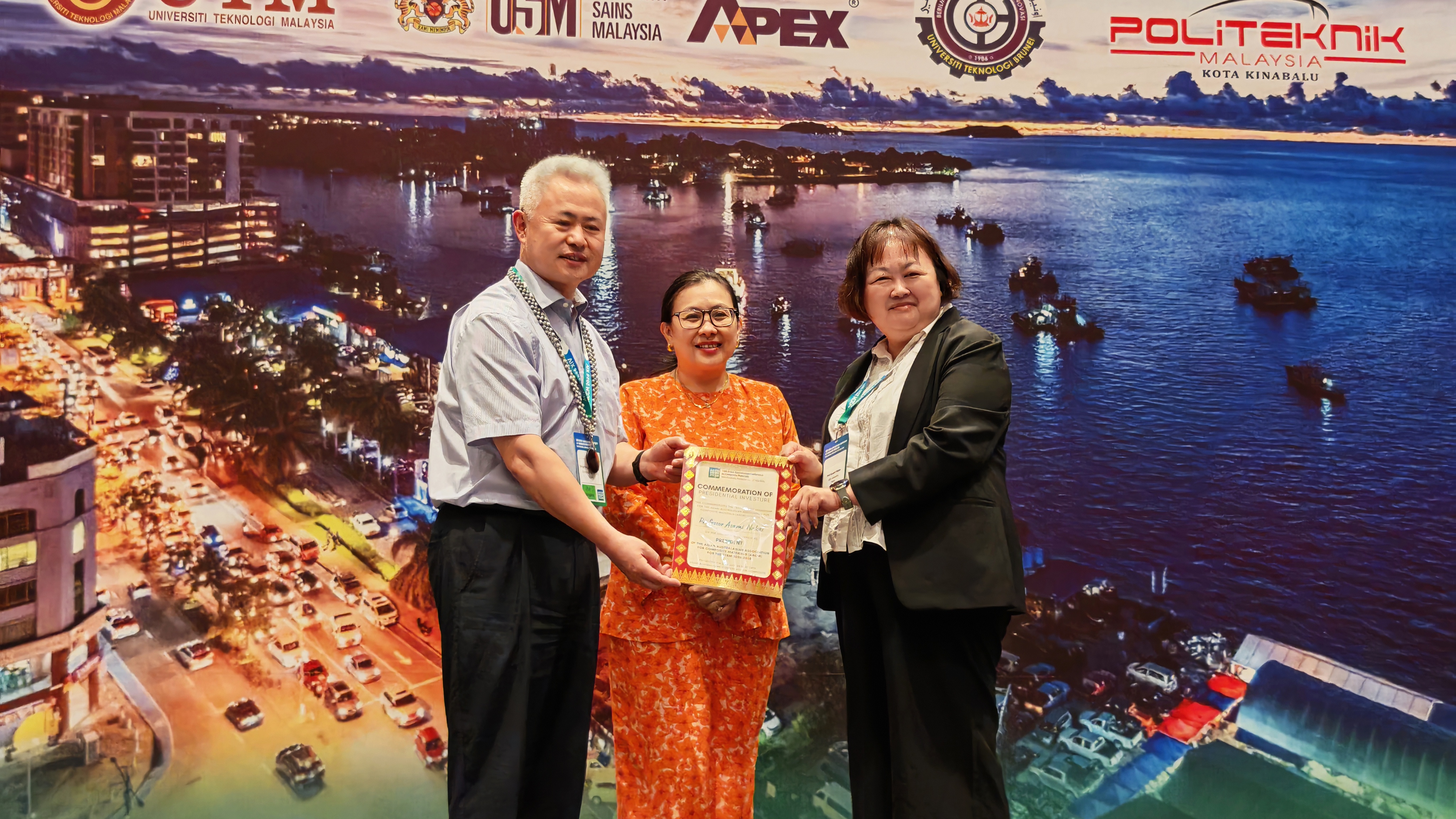
Malaysia’s role in advancing materials science is set to expand further, with Professor Mariatti appointed as the incoming President of the Asian-Australasian Association for Composite Materials (AACM) for 2028. The conference will next take place on Jeju Island, South Korea, for its 15th edition in 2028.-pr/BNN