KOTA KINABALU: The State Government aims to reduce Sabah’s absolute poverty rate to between three and five per cent by 2030, while sustainably maintaining zero hardcore poverty through the implementation of the Sabah Maju Jaya (SMJ) 2.0 Development Plan.
Chief Minister Datuk Seri Panglima Haji Hajiji Haji Noor said achieving these targets required a more comprehensive, integrated and outcome-oriented action plan, rather than merely increasing the number of programmes or assistance provided to the people.
He said the effort also required clear, measurable annual targets to reduce the number of poor heads of households under the Sabah State Poverty Eradication Plan 2027-2030.
“Based on the eKasih system report as of October 15, 2026, Sabah still recorded 55,555 heads of households (KIR) classified as poor. Therefore, I want this figure to serve as one of the baseline data sets for establishing Key Performance Indicators (KPIs) under the plan, with clear and measurable annual targets for reducing the number of poor heads of households,” he said.
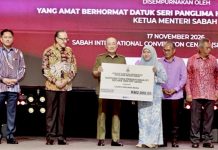
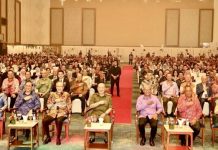
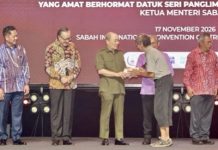
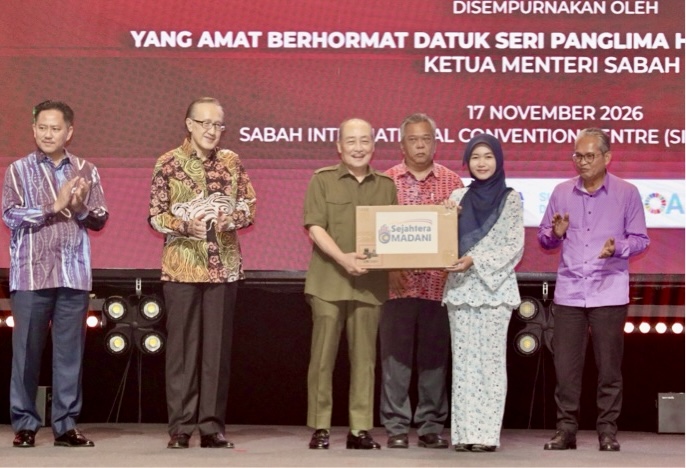
He said this when officiating at the 2026 People’s Well-being and Transformation Symposium (KESTRA), an initiative under the SMJ 2.0 Development Plan, at the Sabah International Convention Centre (SICC) here today.
Hajiji said every ministry and agency involved must set intervention targets and report actual outcomes to help households escape poverty sustainably. He said Sabah must also develop a clear Poverty Exit Policy or guidelines suited to the socioeconomic circumstances of the state’s people.
“We cannot measure success merely by the number of recipients removed from the poverty list. We must ensure that they are genuinely capable of becoming self-reliant and do not fall back into the cycle of poverty,” he said.
He said assessment indicators must be refined to take into account household incomes that consistently exceed the Poverty Line Income (PGK), stable employment or sources of income, safe housing, the ability to meet basic needs and ownership of productive assets.
However, he stressed that implementing the Exit Policy did not mean government assistance would automatically cease once a recipient’s income exceeded the poverty line.
Instead, a gradual transition mechanism, continuous monitoring and appropriate support must be provided, particularly for families still at risk of falling back into poverty.
Hajiji said all government assistance programmes, including Rumah Mesra SMJ, Sentuhan Kasih Rakyat (SYUKUR), educational assistance, scholarships, zakat, welfare assistance, skills training and entrepreneurship programmes, must be coordinated under a single integrated intervention framework.
He said every ministry and agency must have clearly defined responsibilities, including designated lead agencies, implementation timelines, funding sources and KPIs that genuinely measure improvements in living standards and household incomes.
He also emphasised the importance of exploring blue economy sectors, such as fisheries, aquaculture and marine tourism, to generate income for the people.
He said institutions of higher learning must produce highly skilled graduates, while industries must intensify investments to create more employment opportunities.
At the same time, he said attention must be given to Sabahans who had migrated to Peninsular Malaysia in search of employment by creating more job opportunities in the state so that they would no longer be compelled to seek livelihoods elsewhere.
He also reminded all ministries, departments and agencies that 2030 was not a deadline to wait for, but a target that demanded action starting now. “I do not want this plan to become just another policy document that is filed away without effective implementation.
“Instead, I want every plan to be translated into action, every form of assistance to make an impact and every ringgit spent to bring about meaningful changes in the lives of the people,” he said.
Meanwhile, on education, Hajiji said the State Government continued to strengthen the Sabah State Government Scholarship programme by increasing its annual allocation from RM55 million in 2021 to RM160 million in 2026, representing an almost threefold increase.
He said the total scholarship allocation from 2021 to 2026 had reached RM625 million, benefiting a cumulative 16,207 students as of this year, including 5,412 students who received scholarships in 2026.
He said the initiative was not merely about providing financial assistance for students to pursue higher education, but also represented a long-term investment in Sabah’s human capital development.-pr/BNN