KOTA KINABALU : The political landscapes of Sabah and Sarawak have evolved along different paths since the formation of Malaysia in 1963, shaped by historical factors, demographic realities, and local leadership patterns.
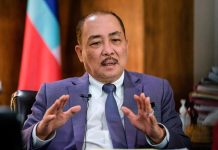
This was stated by former Sabah Chief Minister Datuk Seri Panglima Dr Salleh Said Keruak, who shared his views in a Facebook posting.
According to the UMNO Sabah Treasurer, Sarawak has maintained a political approach centred on local-based parties, with UMNO never establishing itself in the state in order to preserve political stability and avoid fragmentation of Bumiputera support, particularly among Muslim Bumiputera communities.
He noted that although national parties such as People’s Justice Party, Democratic Action Party, and Pan-Malaysian Islamic Party entered Sarawak carrying narratives of reform, social justice, and multiracial politics, their influence remains concentrated in certain areas.
“In Sarawak, rural and mixed constituencies continue to be the stronghold of local parties. This has made the state more inclined towards state-based leadership in matters concerning state rights, development, and the implementation of the Malaysia Agreement 1963 (MA63),” he said.
Salleh, a three-term former Member of Parliament for Kota Belud, said the situation in Sabah differed significantly, as UMNO entered the state in 1991 at the invitation of Mustapha Harun and United Sabah National Organisation to unite Muslim Bumiputera support.
He said UMNO subsequently played a dominant role in Sabah politics for an extended period.
However, he added that current political realities show Bumiputera support has now fragmented into several political blocs, and UMNO is no longer the sole platform for unity.
“UMNO Sabah no longer plays a dominant role. Instead, it now serves as a complementary force supporting the state government led and anchored by coalitions of local parties,” he said.
Salleh added that UMNO’s future in Sabah would depend on how far the party is willing to accept the new political realities and build strategic cooperation to strengthen unity, state development, and the implementation of MA63.
Overall, he said Sarawak continues to be driven by the strength of local parties, while Sabah maintains a balance between the influence of local-based parties and the complementary role of national parties.-pr/BNN