
LAHAD DATU: Sabah has the potential to expand its agri-food sector through agriculture, livestock farming, aquaculture and food processing, however this will require a skilled workforce, appropriate technology and strong links with markets.
Chief Minister Datuk Seri Panglima Haji Hajiji Haji Noor said the sector is important for supporting food security, creating jobs and generating income for the community.
He said the sector’s development should align with the Sabah Development Corridor (SDC) Blueprint 2.0, which emphasises competitive, inclusive and sustainable economic growth.
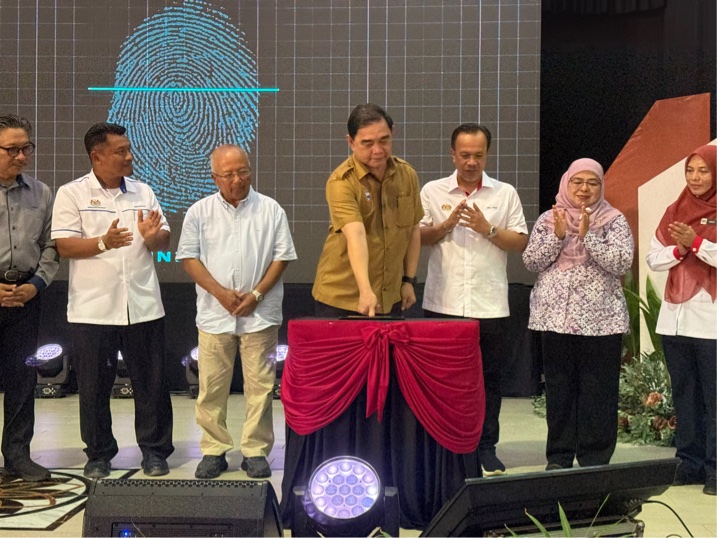
“This direction must be translated into increased productivity, wider community participation in economic activities and responsible resource management,” he said at the launch of SEDIA AgroFoodPakar, held in conjunction with the 2026 MADANI Agro TVET Carnival at the Lahad Datu Vocational College (KVLD), Palma Hall today.
His speech was delivered by State Minister of Education, Science, Technology and Innovation, Datuk James Ratib.
The Chief Minister, who is also SEDIA chairman said SEDIA AgroFoodPakar aims to help 80 participants earn a Malaysian Skills Certificate (SKM) Level 3 in eight agriculture and agri-food fields.
The qualification will be awarded through the Recognition of Prior Achievement (PPT) method using Practical Assessment (PPA) under the Department of Skills Development (JPK).
He said the programme, the first of its kind at KVLD, will be conducted over two days, compared with the usual scedule which can take up to 18 months.
Participation costs will be fully covered by the Sabah Economic Development and Investment Authority (SEDIA).
The eight fields offered are ruminant farm supervision, agricultural biotechnology laboratory operations, freshwater aquaculture supervision, poultry farm operations, plantation agricultural machinery, landscape construction supervision, crop production operations and food processing.
Hajiji said the partnership between SEDIA and KVLD also includes the IPR-INTAN Ginger Cultivation Programme, supported by the Ministry of Economy, to strengthen local capabilities and expand Sabah’s agri-food economic potential.
He said the programme aims to help 30 participants from the B40 income group, including students and parents, earn RM2,000 per person per month.
Each participant will receive 1,000 ginger seedlings to plant on a three-acre site at KVLD.
“The programme is expected to provide practical experience in crop cultivation and farm management, while helping participants build an additional source of income with potential for growth.
“Meanwhile, the Coconut Tree Planting Programme is being carried out on a 10-acre site at KVLD, involving 1,000 pandan and Tacunan coconut seedlings,” he said.
Hajiji said the initiative aims to strengthen cooperation between SEDIA and agricultural training institutions in Sabah, expose students to modern agricultural technologies and practices, and explore alternative income opportunities through coconut products and downstream processing.
“Under the theme ‘A Thousand Coconuts, One Legacy’, the initiative also aims to earn recognition from the Malaysia Book of Records in the category ‘Most Coconut Tree Seedlings Planted in an Event’.
SEDIA and KVLD officers and staff jointly contributed 456 seedlings, with the remainder provided by SEDIA,” he said.
Hajiji said Technical and Vocational Education and Training (TVET) plays an important role in developing skills and creating pathways to employment and entrepreneurship.
Skills are gained not only through formal education; work experience, practical training and hands-on learning also build valuable knowledge and competence.
He expressed hope that the 2026 MADANI Agro TVET Carnival at KVLD would bring together training institutions, industry, government agencies and the community to share knowledge and explore partnerships, in line with the theme “Empowering Agriculture, Advancing MADANI TVET”.
He said the SEDIA KVLD partnership should continue with strong commitment to ensure that skills are recognised and put to use, agricultural potential is developed more effectively, and training institutions continue to drive local talent and economic development.-pr/BNN


