The twitters of birds and the sounds of rushing water at the river as well as the thunder of the waterfall in the distance is reminiscent of a village in an age gone by.
Somewhere, a dog barks which seems to complete the scenario somehow.
Personally it is like going home or at least, a walk back in time.
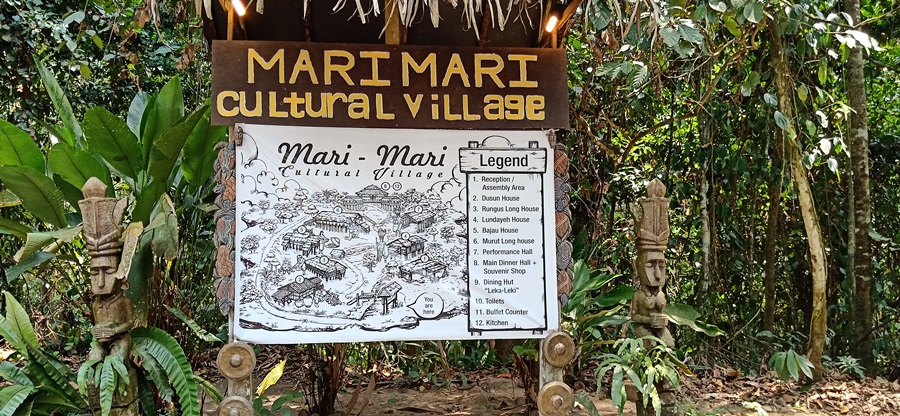
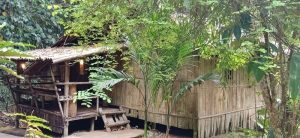
Walking into Mari Mari Cultural Village brings about these feelings as this is a place that features traditional houses reminiscent of pre-colonial days. True to life, the village is sited on gentle slopes by a rushing river, from the Kionsom Waterfalls.
Although there are about 40 ethnic groups in the State, they chose to showcase five of them, mainly the Dusun which is the largest group followed by the Rungus, Bajau, Murut and Lundayeh.
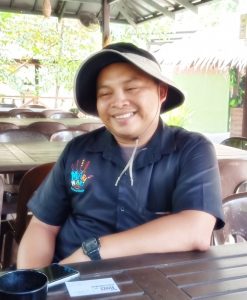
Mari Mari’s Base Manager, Jeremiah James shared that these group are featured because of their individual uniqueness.
Upon entering the village, the guide brings guests to the first traditional house; the Liwan’s. Within, a few pretty girls in traditional dresses mill around, while the guide explains the workings of the home to his guests.
The girls gracefully show the visitors how they made traditional rice wine Lihing and liquor montoku. After watching this demonstration, guests are shown how food used to be cooked; in the hollows of bamboo joints.
The fascinating rooms in the house is given due attention especially the two rooms for children. The two rooms for children have an upper and lower deck. The girls will climb up to the upper deck using a ladder which will be removed as soon as they are about to sleep. This is to protect them from being disturbed by intruders during the night while the boys at the lower deck will also serve as their bodyguards. In those days of ‘might is right’ this form of security is very important.
The kitchen area will always bring fond memories of days gone by when one sit by the fire for warmth. The fire place is on the floor, with hardened soil on the bottom to contain wood and ash. This is where food is cooked. There is a deck above where fish and meat are smoked as a form of preservation. Water containers made of bamboo are hung at the side, so that the heat of boiled water is maintained. Cold water is usually placed in jars.
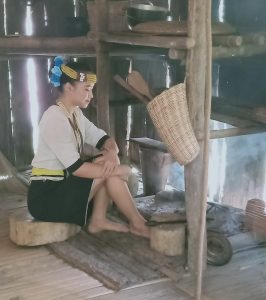
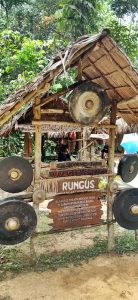
A sip or two of lihing and visitors stroll to the Rungus longhouse which is synonymous with gongs and kelulut honey (stingless bees).
Guests have a chance to know more about honey farming as the guide demonstrate the traditional method of attracting bees into bamboo cuts with a little hole where they place bits of sugarcane and honey.
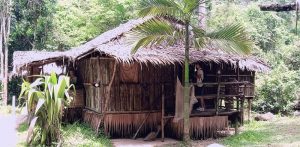
Visiting their longhouse is always a treat although they are the last tribe to relinquish communal living. Their traditional longhouse made of betel tree trunk and palm tree fronds, iron wood and mangrove tree is usually 30- doors long.
Each door is occupied by one family and this will usually contain a mini kitchen placed at the corner for occupants to do their cooking. The long house is also equipped with a common kitchen outside the living room.
At Mari Mari, a young man will show guests how to light a fire using the traditional bamboo shavings and tools; rub them together vigorously and a spark is produced. Amazing!
Guests can then traipse off to the Lundayeh tribal house. This group of people is found living in Sipitang and Long Pasia located some 140 kilometres south of Kota Kinabalu. They are also concentrated in neighbouring Limbawan, Sarawak and North Kalimantan, Indonesia.
Guests will definitely be fascinated by these people’s ancient way of burying their dead. The deceased is placed in a huge jar and hung on a tree!
They are buried with precious belongings including jewelries so as time went by, thieves made these hanging burial jars rare.
There are sights to see at the Lundayeh house, including a mound made in the shape of a crocodile, symbolising strength and bravery in the olden days. They also have a house of skulls where skulls of slain enemy warriors are hung.
Guests will later be shown how clothes are made in the olden days. An interesting sight indeed.
The other house that is shown in the village is the Bajau traditional house. This tribe is originally from the southern Philippines some 500 years ago
Some of their more food is shown in the house including the Kuih Jala and Panjaram. They are very popular and can be found everywhere in traditional tamu or market.
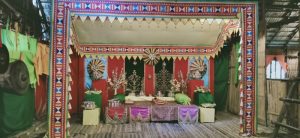
Besides that visitors can view their colourful bridal dais set up in the living area for photographs.
Onwards to the Murut place where fierce warriors stop visitors at the gate before they are allowed to enter their so-called village after they had successfully answered their question.
In the house they will showcase their ‘lansaran’ or traditional trampoline as well as try their skills at the blowpipe. Very interesting. After that guests can relax and enjoy a traditional dance performance on stage; a very touristy thing to do and practice in many other similar sites.
Jeremiah shared the cultural village was opened in 2009 and manned by 80 full and part time staff including demonstration team.
“The cultural village can accommodate a maximum of 260 people at any one time. We have two tours per day at 10am and at 2pm…which means we have two sessions per day,” Jeremiah said.
One tour last for three hours and China tops the most arrival to the place, followed by Koreans and Japanese. The bulk of visitors are from within the country and Brunei.
The ticket price is RM100 for adults and RM90 for children while those aged below five years old are free.
The ticket price is inclusive of luncheon for morning session and hi-tea for afternoon show.
“This cultural village will usually close during bad weather and thunderstorm. This is for safety reasons,” he stated.-ce/BNN