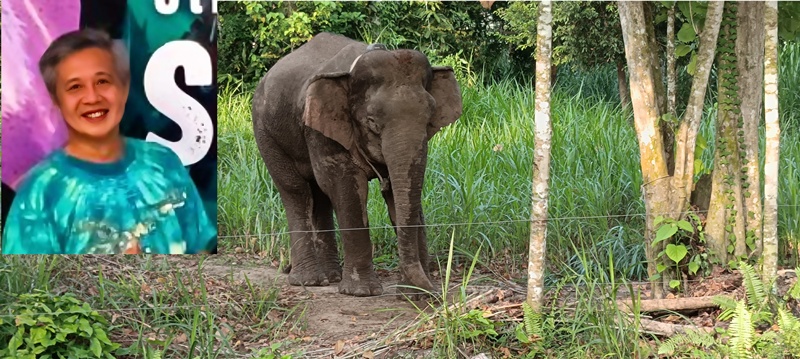
SANDAKAN: Seeing an elephant in the wild for the first time, I felt awe and wonder, as if everything around me becomes surreal. There’s also a hint of fear, a reminder of the animal’s power and the wildness of nature. This sighting was at Tanini Kinabatangan Lodge.
The sightings at Tanini Kinabatangan have demonstrated a significant increase in the local elephant population, highlighting the positive impact of innovative conservation strategies implemented over the past few years.
According to the Lodge proprietor, Alexander Yee, when the food pasture was first established in 2024, rangers recorded 38 elephants frequenting the area. This initial figure suggested a herd that would regularly return to the feeding grounds, and subsequent counts confirmed this trend. By 2025, sightings had more than doubled to 68 elephants, indicating a growing presence.
The most dramatic increase occurred between January and July 2026, with recorded sightings reaching 248 elephants. While the final figure for the year remains uncertain, this upward trajectory suggests a thriving herd, with the numbers likely to continue rising.
This data provides compelling evidence of the effectiveness of the project. As Yee, explains, elephants are known for their excellent memories, they roam the landscape, recalling where food sources are located. The strategy has been to encourage elephants to utilise designated food patches and corridors, rather than venturing into villages or plantations, thereby reducing human-elephant conflict.
“Now, they come to the food patch instead of encroaching on the village or plantations,” Yee said. “This has already resulted in less encroachment and human-elephant conflict.”
The approach contrasts sharply with traditional methods such as erecting fences or digging trenches to block elephant movement. Instead, conservationists have opted to plant abundant food sources away from human settlements, understanding that elephants are primarily seeking nourishment.
“This method works,” Yee affirmed, citing the statistical data collected. “It’s a different approach, and it’s proving successful.”
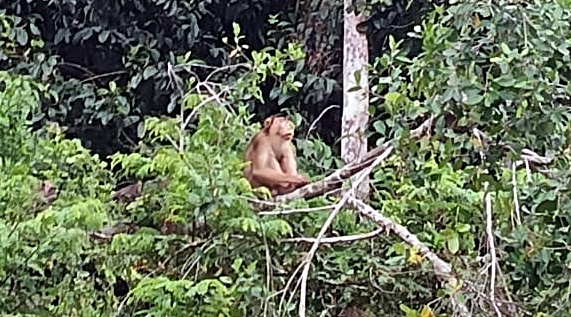
The question remains whether the elephant population has genuinely increased since the project’s inception. According to recent sightings, a herd comprising 48 adults and ten calves was observed just two months ago. Calves are classified as less than two years old, as it typically takes that long for a young elephant to grow taller than its mother and cease nursing.
“Once they grow beyond that stage, they stop nursing and feeding on their mother’s milk,” explained Yee. “That’s how we identify the adults.”
While the current numbers are promising, conservationists remain cautious. The scientific community continues to assess the herd’s maximum sustainable capacity, with concerns about potential overpopulation.
However, Yee advises a cautious approach. “Most recent reports focus on protecting the Bornean elephant, which is an endangered species with the risk of extinction. With the increase in calf sightings, I wouldn’t jump to conclusions and declare the population out of the danger zone just yet. A proper population assessment needs to be conducted first.”
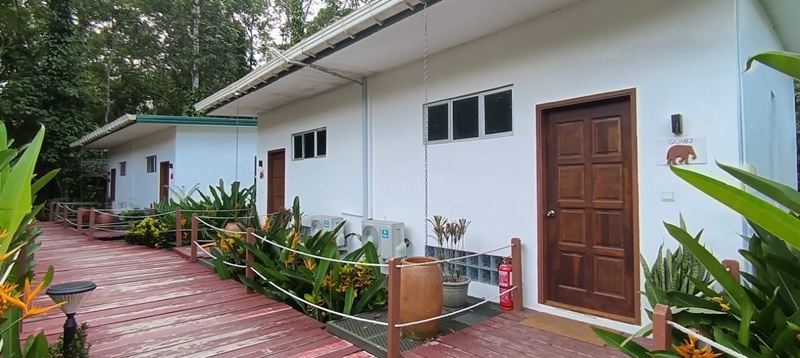
The ongoing efforts at Tanini Kinabatangan highlight the importance of innovative, habitat-based conservation strategies. As the herd continues to grow, the hope is that such programmes will serve as a model for sustainable coexistence between humans and wildlife in the region.
Tanini Kinabatangan, situated along the banks of the mighty Kinabatangan River, offers a truly immersive experience in one of Borneo’s most diverse and vibrant ecosystems. The lodge provides cosy accommodations, where tranquillity reigns in the evening, broken only by the gentle chorus of nocturnal sounds echoing through the rainforest.
Each morning, during the river cruise, you can observe crocodiles basking lazily on the riverbanks or slowly swimming through the waters, their eyes just above the surface. Occasionally, massive crocodiles lie motionless on the banks, as relaxed as an elderly man resting in a park. In the afternoon, the scene shifts to an energetic display of wildlife. Proboscis monkeys dominate the treetops, leaping and swinging with playful confidence, their large noses and expressive faces adding to the spectacle. Long-tailed macaques and silvered leaf monkeys also emerge in large numbers, chattering and frolicking in the canopy.
It is truly extraordinary to witness these animals in their natural habitat, something that can only be fully appreciated in the wild, rather than from a magazine or YouTube video. Tanini is undoubtedly the place to experience the rich tapestry of Kinabatangan’s wildlife; a sanctuary where nature’s marvels unfold before your eyes in the most captivating way.-BNN