KOTA KINABALU: Sabah is leveraging its natural resources sustainably to attract investment, strengthen market access, and generate higher-value economic opportunities, said Chief Minister Datuk Seri Panglima Haji Hajiji Haji Noor.
“Sustainability is no longer simply a matter of environmental protection or regulatory compliance, important as those responsibilities remain.
“It is increasingly influencing where investments go, which businesses can access international markets, and how competitive our industries will be in the years ahead,” he said at the opening of the Sustainable Action Conference 2026 (SAC 4.0) at the Magellan Sutera Resort here today.
The event, held for the first time here, was organised by Control Union Malaysia, with the support of the Embassy of the Kingdom of the Netherlands in Malaysia.
Assistant Minister to the Chief Minister Datuk Ceasar Mandela Malakun delivered the Chief Minister’s speech. He said Sabah is fortunate to possess extraordinary natural wealth.
“Our forests, biodiversity, rivers, coastlines and marine ecosystems are among our greatest assets. They support many of our key industries, but more importantly, they sustain the livelihoods of countless Sabahans.
“We must therefore recognise that protecting our environment and pursuing economic development are not opposing objectives. Our challenge is to achieve both. We must develop our resources responsibly, so that they continue to provide opportunities and prosperity for future generations,” he said.
The Chief Minister said this aligned with the Sabah Maju Jaya 2.0 development plan for 2026 to 2030.
“Agriculture, industry and tourism remain important pillars of our economy, and sustainability must increasingly become an enabler of their growth. “
“Our Blue Economy agenda also presents considerable opportunities, particularly in sustainable fisheries, aquaculture, marine biotechnology, maritime activities and nature- based tourism.
“We want these industries to grow, but their long-term success depends on how well we manage the resources on which they rely,” he said.
A similar principle applies to the state’s forests and mangroves, which protect biodiversity, store carbon, and support coastal communities’ resilience, he said.
“These are not merely environmental assets, they have real economic and social value. When a river becomes polluted, or a marine ecosystem is damaged, the consequences are felt by fishermen, farmers, tourism operators and the communities who depend on them.
“Responsible management is therefore not only good environmental policy. It is also sound economic policy,” he said.
Another key focus is energy, he said, adding that through the Sabah Energy Roadmap and Master Plan 2040, the State Government is working toward greater energy security, more reliable supply, and opportunities for renewable energy and new technologies.
“We recognise that Sabah needs sufficient and affordable energy to support industrial growth and investment. At the same time, we must progressively improve the sustainability and efficiency of our energy system.
“The same applies to the buildings, infrastructure and cities we develop today. The decisions we make now will influence how efficiently our communities use energy and resources for many years to come,” he said.
Hajiji said another important consideration is the changing expectations of international markets.
“For Sabah’s agriculture, forestry, fisheries and aquaculture industries, it will increasingly matter not only what we produce, but how responsibly we produce it. Traceability, environmental standards and good governance are becoming important factors in market access and competitiveness.
“We must help our local industries, including smaller businesses, prepare for these changes. Adapting to higher standards requires investment, knowledge and time. Our approach must therefore be practical, raising standards while ensuring that our local businesses are not left behind,” he said.
Hajiji was also pleased to note that the conference is giving attention to practical action, such as the Zero Waste to Landfill initiative, which encourages participating organisations to divert at least 75 per cent of their operational waste from landfill within 12 months. “
“I encourage more organisations in Sabah to consider how they can reduce waste, recover resources and improve efficiency in their own operations,” he said.
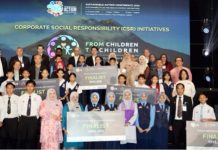
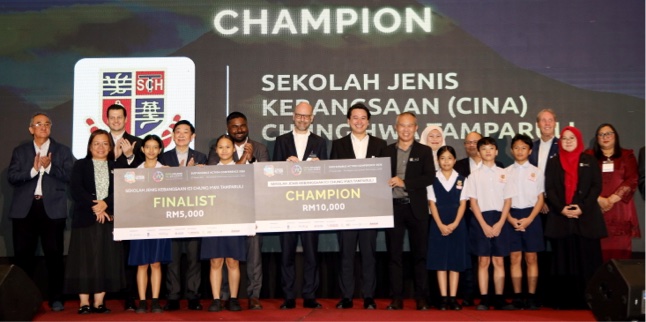
The Chief Minister also welcomed the continuation of the From Children to Children initiative and this year’s RM40,000 commitment to school-led sustainability projects in Sabah.
The Chief Minister said the State Government cannot undertake the transition to a more sustainable economy alone. “We need businesses, financial institutions, investors, researchers and communities to work together.
Sabah welcomes partnerships that can bring new investment, technologies and expertise to our State.
“At the same time, we want these opportunities to create meaningful employment, strengthen local capabilities and deliver tangible benefits to our people.
Ultimately, our success must not be measured only by the investments we attract, but also by the lasting value they create for Sabah and its people,” he said.-pr/BNN