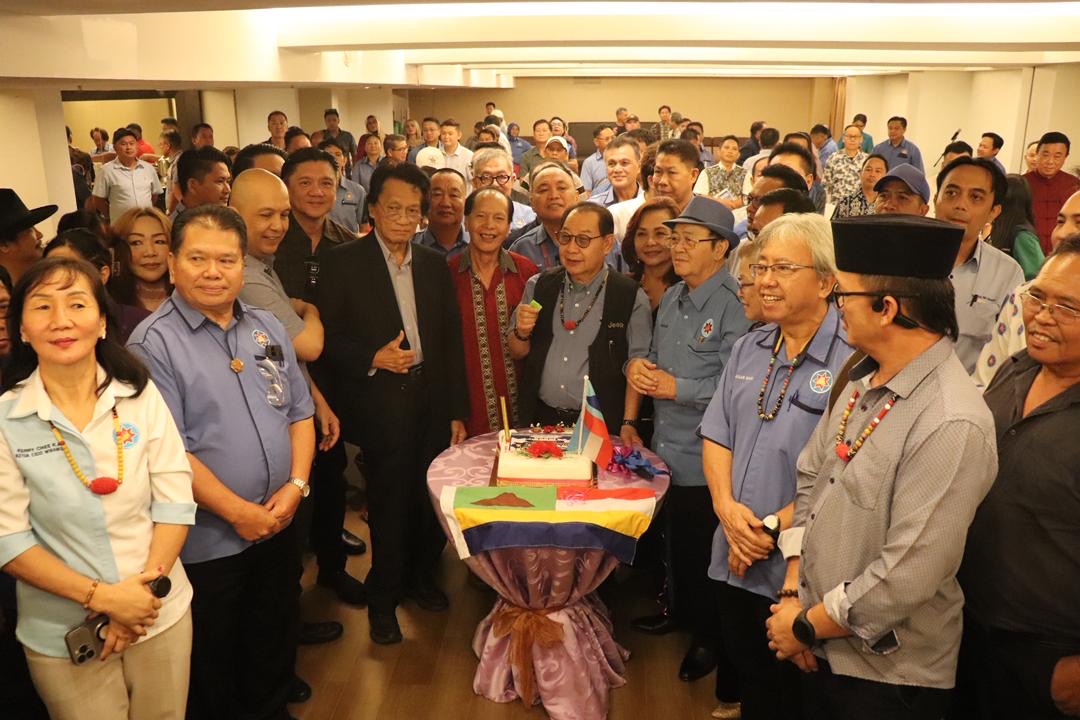
KOTA KINABALU: After more than three decades of political struggle, Parti Solidariti Tanah Airku (STAR) continues to place Sabah’s constitutional rights, the Malaysia Agreement 1963 (MA63) and the 20-Point safeguards at the centre of its political agenda.
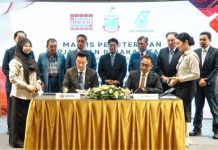
This report by Anuar Ghani, Chief Information Officer, STAR Sabah, was compiled following an interview with Datuk Seri Panglima Dr Jeffrey G. Kitingan during a Special Presidential Meeting with STAR Sabah leaders, attended by division chiefs and secretaries from across the state.
The gathering, held at the Palace Hotel here, was also organised to commemorate Sabah’s birth and to reflect on the state’s history and position in the formation of Malaysia.
At the meeting, STAR reaffirmed its commitment to pursuing Sabah’s rights under MA63 and the 20 Points, including issues involving financial entitlements, state autonomy and Sabah’s constitutional position within the Federation.
Among the key figures who have consistently championed these issues is Jeffrey, whose advocacy for Sabah’s rights dates back more than three decades.
Jeffrey was detained under the Internal Security Act (ISA) in May 1991 and released in December 1994 after 26 months, as previously reported by the Daily Express.
He subsequently maintained that his struggle centred on Sabah’s rights under MA63 and the protection of the 20 Points, rather than any attempt to take Sabah out of Malaysia.
Raising Awareness of MA63
Jeffrey said public awareness of MA63 and the 20 Points was relatively limited when he first began raising the issues.
Today, MA63, Sabah’s constitutional rights, the 40 per cent revenue entitlement and state autonomy have become among the most prominent issues in Sabah politics.
STAR views this development as the result of sustained efforts by various parties and individuals over the years.
However, the implementation and interpretation of several provisions related to MA63 remain subjects of debate among the state and Federal governments, as well as political parties.
MA63-Related Issues
Among the issues consistently raised by Jeffrey are Sabah’s financial rights, state boundaries, oil and gas resources, the continental shelf, autonomy and Sabah’s constitutional position.
He has called for these matters to be addressed through concrete action.
The status of each issue, however, depends on legal provisions, court decisions, inter-governmental negotiations and prevailing government policies.
The 40 Per Cent Revenue Entitlement
Sabah has continued to pursue its entitlement to 40 per cent of the net revenue derived by the Federal Government from the state, as provided for under the Federal Constitution.
Jeffrey has repeatedly raised the matter in the Sabah State Legislative Assembly and Parliament.
During a debate in February 2026, he said the issue had yet to be fully resolved and linked the claim to Sabah’s development needs, including efforts to address poverty and improve water supply, electricity and road infrastructure.
The Federal and state governments remain engaged in discussions over the method of calculation, the amount payable and the mechanism for implementation.
STAR has proposed a clearer formula and the use of technology and digital systems to improve transparency in the calculation process.
Proposal for 35 Per Cent of Parliamentary Seats
Jeffrey has also supported a proposal for Sabah and Sarawak to collectively hold 35 per cent of parliamentary seats as a form of political and constitutional safeguard.
The proposal is intended to preserve Borneo representation should the number of parliamentary seats increase in the future.
Its implementation would require amendments to the Federal Constitution and sufficient political support in Parliament.
For now, however, the proposal remains a political demand.
The Borneo Bloc
STAR also supports closer cooperation between representatives from Sabah and Sarawak through the proposed Borneo Bloc, aimed at strengthening the collective voice of the two states on matters of common interest.
The effectiveness of such a coalition would depend on the positions adopted by political parties, elected representatives and the governments involved, as well as developments in the country’s political landscape.
Agricultural Institutions and Food Security
STAR has also linked the struggle for Sabah’s rights with efforts to strengthen state institutions in agriculture and food security.
Among the institutions highlighted are the Sabah Paddy and Rice Board (LPBS) to oversee the state’s paddy and rice sector; the Sabah Oil Palm Industry Authority (SOPIA) to expand Sabah’s role in regulating the palm oil industry; and the Sabah Agricultural Marketing Authority (SAMA) to strengthen the collection and marketing of agricultural produce.
Some of these proposals, however, still require further examination from legal, administrative and financial perspectives.-pr/BNN