KOTA KINABALU: Women’s empowerment in Sabah must not be viewed solely through an economic lens; it must also encompass rights, protection, leadership and wellbeing.
Sabah Women, Health and Public Wellbeing Minister Datuk Julita Majungki said progress for women in Sabah is evident as 42.22 per cent now hold decision-making positions, particularly in technical and professional roles.
“These figures show that women are no longer merely beneficiaries, but are increasingly playing a part in decision-making and contributing to the state’s development,” she said.
“However, women’s empowerment does not stop there. We must also ensure they know their rights, receive protection and have access to support when facing challenges,” she added.
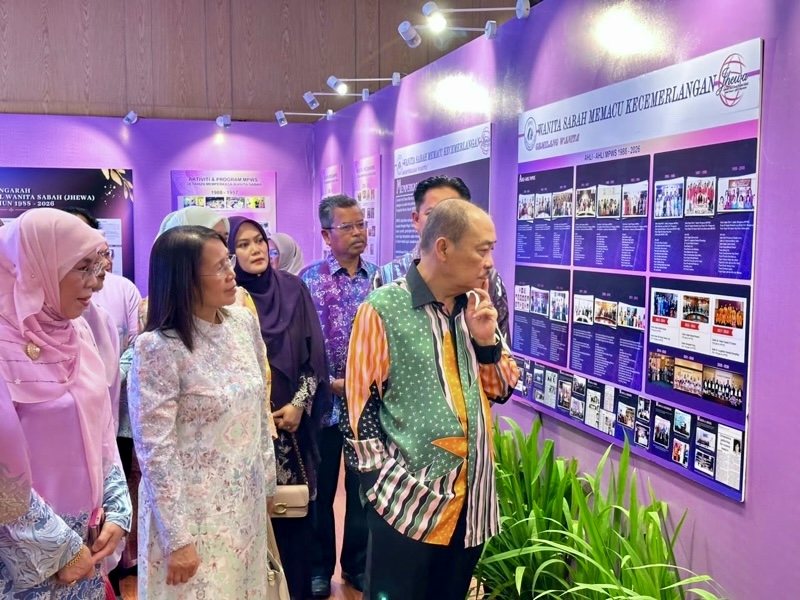
She said this in her speech at the 2026 Sabah State-level Women’s Day Celebration on 4 September, officiated by Chief Minister Datuk Seri Hajiji Noor.
Also present were the Chief Minister’s wife, Datuk Juliah Salag; Assistant Minister to the Sabah Ministry of Women, Health and Public Wellbeing (KWKKR), Datuk Rina Jainal; Sabah Federal Secretary Datuk Mohd Razali Wahab; Sabah State Secretary (SKN) Datuk Zainuddin Aman; SKN Sabah’s wife, Datin Siti Yuslaini Mohd Samsuri; Chair of the Sabah Women’s Advisory Council (MPWS), Datuk Rosmawati Lasuki; and Director of the Sabah Women’s Affairs Department (JHEWA), Haslina Ismail.
Julita said the Women’s Legal Aid Centre (PBGW) had handled 889 cases between 2018 and July 2026, while 1,237 clients accessed services involving 1,625 cases.
“For me, an empowered woman is one who knows her rights, is confident in her abilities and understands that she does not have to face problems alone,” she said.
Julita added that women’s leadership development is being strengthened through the Sabah Women’s Leadership Academy (AKWAN), which has involved 1,215 participants across three cohorts, with 379 participants successfully certified.
At the same time, she said JHEWA continues to expand skills and entrepreneurship opportunities, benefiting 6,952 women across Sabah from 2022 to 2026.
She said this holistic approach is also being implemented through the Sabah Gender Focal Point (SGFP), with nearly 50 certified change agents developed up to Cohort 3 to ensure gender perspectives are taken into account in government planning and service delivery.
“All these efforts are interconnected. When we open up economic opportunities, strengthen leadership, raise awareness of rights and provide protection, we are building women who are more confident, resilient and able to determine their own futures,” she said.
Julita said women’s empowerment efforts require cooperation between the government, non-governmental organisations (NGOs), the private sector and the community to ensure no woman is left behind.
“Women’s empowerment is not only about what we give them, but about the space we create so they can stand on their own strength,” she said.-pr/BNN