KOTA KINABALU: The Malaysia–China Chamber of Commerce Sabah has officially unveiled the banquet menu for its 2026 annual gala, “Timeless Elegance · A Night of Brilliance.”
As an integral part of the overall experience, the evening’s menu brings together Chinese culinary classics and Nanyang flavours, adding depth and warmth to the occasion and standing out as one of its most anticipated highlights.
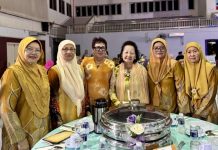
The menu was curated under the coordination and supervision of Lanice Ng, Committee Member of the Women Entrepreneurs Committee.
She shared that under the firm vision and high standards set by President Datuk Dexter Lau, the banquet goes beyond premium ingredients and refined presentation, with its culinary flow carefully designed to reflect the evening’s theme of “a fusion of timeless tradition and contemporary flair.”
She noted that the menu was not created merely for variety or sophistication, but with the intention of allowing guests to better understand one another’s cultures and values through the shared experience of dining.
The evening begins with lobster paired with caviar. Elegantly presented whole lobsters, complemented by the rich delicacy of caviar, set a refined tone for the night while symbolising a distinguished opening.
She revealed that the team worked closely with suppliers to ensure meticulous selection of ingredients, aiming to present not only visual excellence, but also to reflect Sabah’s abundant marine resources and its potential.
The soup course follows with a more composed and reflective pace. Slow-cooked with premium ingredients such as fish maw, dried scallops, morel mushrooms and cordyceps flowers, the broth is clear yet richly flavoured.
Lanice explained that this dish represents a key principle in business partnerships—time and trust.
“Many long-term collaborations are not built through a single meeting, but through time,” she said. “This soup reflects patience and depth.”
One of the most symbolic highlights of the evening is the handcrafted dumplings, prepared live by chefs from China. Delicately wrapped and adorned with gold leaf, the dumplings shimmer subtly under the lights.
In Chinese culture, dumplings symbolise reunion and unity, and their presence in Sabah creates a meaningful connection across geography and time.
“Early Chinese communities journeyed from China to Nanyang, and today, entrepreneurs gather here once again—it is a continuation,” she said.
More than a cultural display, the dumplings serve as a bridge of emotion, bringing together individuals from diverse backgrounds at the same table.
The main course centres on a reinterpretation of Nasi Lemak, paired with abalone and satay elements, presenting a harmonious blend of Chinese and Malaysian flavours. Lanice noted that this dish reflects Malaysia’s true multicultural identity.
“Nasi Lemak is our national dish, satay represents our diversity, and abalone symbolises growth and advancement,” she said. “This combination does not replace tradition—it allows different cultures to coexist on the same platform.”
She added that this mirrors the relationship between Malaysian and Chinese enterprises—not one of replacement, but of collaboration and mutual growth.
The following dish of abalone, sea cucumber, and seasonal greens returns to a tone of balance and stability.
It reflects the importance of sustainability and resilience in business, especially in a rapidly changing environment.
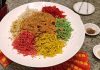
Dessert concludes with a platter of traditional Malaysian kuih, bringing together a spectrum of colours and flavours that reflect the fusion of Peranakan, Malay, and Chinese cultures. Lanice described it as not only a combination of tastes, but also a reflection of Malaysia’s social fabric.
“The culture of this land has been shaped through gradual integration,” she said. These traditional sweets also echo the journey of early Chinese settlers—from longing to belonging—now shared once again with guests from China, forming a connection across time.
The beverage selection further enhances the experience with a refined balance of East and West. Guests will be served Martell Cordon Bleu and a selection of French red and white wines.
The cognac offers depth and complexity suited for formal exchanges, while the wines provide elegant pairings that complement the dishes. Together, they reflect an atmosphere of openness and cultural exchange.
In addition, premium Longjing (Dragon Well) tea from the President’s private collection will be served, offering a touch of Eastern elegance. As one of China’s most renowned teas, Longjing undergoes meticulous processes—from hand-picking tender leaves to pan-firing and careful shaping.
The result is a clear infusion with a refreshing taste and lingering sweetness, embodying the subtlety and refinement of Chinese tea culture, while symbolising enduring friendship and long-term cooperation.
Lanice noted that in many settings, meaningful collaborations often begin over a glass of wine or a cup of tea.
The coexistence of diverse beverages on the same table reflects the convergence of different backgrounds, gradually fostering understanding and trust.
She added that as Sabah continues to grow as a destination rich in both tourism and investment potential, such a banquet serves not only as a platform for engagement, but also as a window into the region’s cultural depth and opportunities.
“This is not just about one evening,” she said.
“We hope it marks the beginning of meaningful connections and lasting collaboration.”-pr/BNN