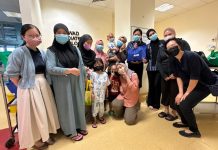
KOTA KINABALU: The State Government remains steadfast in strengthening support for those in need, including vulnerable HIV/AIDS patients in Sabah, said Chief Minister Datuk Seri Panglima Haji Hajiji Haji Noor.
“In this shared struggle, our response must be seamless and far-reaching. We remain deeply committed to ensuring our efforts reach communities across Sabah so that no one, regardless of how remote, is left behind.
“These efforts are further strengthened through the leadership and strategic direction of the Ministry of Health (MOH) under the National Strategic Plan on Ending AIDS 2030 (NSPEA2030), which continues to guide and coordinate the nation’s HIV/AIDS response.
“As Malaysia works towards the Ending AIDS 2030 goals, expanding access to treatment and improving adherence remain key priorities of this national agenda,” he said at the Red Ribbon Kota Kinabalu High Tea organised by the Malaysia AIDS Foundation(MAF) at the Hilton Hotel here on Sunday.
His speech was delivered by Assistant Minister to the Chief Minister, Datuk Caesar Mandela Malakun.
He said initiatives that strengthen support systems for people living with HIV/AIDS are both timely and necessary.
“While treatment and care services are provided free by the Government, many vulnerable individuals still face practical and financial barriers to consistent care, especially those from low-income backgrounds and remote communities,” he said.
Hence, programmes such as the Sabah Health Access Programme (SHAPE) served as an important support mechanism alongside initiatives such as MOH’s Differentiated HIV Services for Key Populations (DHSKP) and selected Health Clinics across Sabah.
“These programmes help vulnerable individuals continue accessing treatment and care more consistently and effectively.
“They also help bridge the poverty gap faced by underprivileged Sabahans living with HIV/AIDS by supporting continued access to treatment and care, such as assistance with transportation to hospitals and clinics, food allowances, and basic daily necessities,” he said.
The Chief Minister said this support may seem simple, but it is often critical in enabling patients to continue treatment consistently, while living with greater dignity, stability, and hope.
At the same time, he stressed that prevention and education efforts are of the utmost importance and must be intensified.
“The growing number of HIV infections among young people, particularly through sexual transmission, requires serious and sustained attention,” he said.
Equally important, he said, is the need to address stigma and misinformation, which continue to hinder meaningful progress in the HIV response.
“We must foster a society that approaches public health challenges with compassion, maturity, and evidence-based understanding,” he said.
Hajiji acknowledged that the Government cannot address these challenges alone due to the complexity of the HIV/AIDS epidemic, which requires a whole-of-society approach and strong collaboration among government agencies, healthcare institutions, civil society organisations, community leaders, and the private sector.
In this regard, the Chief Minister said the Sabah State Government is encouraged by the growing participation of the corporate sector in supporting HIV/AIDS response initiatives in Sabah.
“The involvement of organisations such as Yayasan PETRONAS, Sunway Group, Berjaya Corporation Bhd and Affin Bank, among others demonstrates how shared responsibility and collective action can create greater, more coordinated, and more sustainable impact.
“This underscores the importance of continued collaboration to ensure a more inclusive and sustainable HIV/AIDS response,” he said.
Also present were Malaysia’s Deputy Health Minister Dato’ Hajjah Hanifah Hajar Taib, Patron of MAF Borneo, Datin Patinggi Datuk Amar Hajah Jamilah Haji Anu and Chairman of MAF, Dato’ Dr Adeeba Kamarulzaman.-pr/BNN